Kolkata, May 31, 2026 : India’s creative economy is emerging as one of the country’s fastest-growing sectors, with design talent increasingly powering industries spanning fashion, luxury, media, retail, gaming and digital innovation. India’s textile and apparel industry, valued at USD 225 billion in 2025 and projected to reach USD 350 billion by 2030, is the country’s second-largest employer, supporting over 45 million jobs. Bengal holds a distinctive position within this transformation. Home to craft and textile traditions such as Kantha, Baluchari, Jamdani, and Tant, along with one of India’s largest silk ecosystems, the state continues to shape the country’s cultural and design landscape. As industries rapidly evolve through AI, digital commerce, and global collaboration, the need for industry-connected and technology-enabled creative education is becoming increasingly important for emerging talent.
Against this backdrop, Pearl Academy, India’s leading private creative design institution with 33 years of legacy, announced a landmark AI-first transformation of its academic ecosystem at a media interaction in Kolkata. With demand rising for professionals across luxury, retail, fashion, media, gaming, interiors, and entrepreneurship, the institution is redesigning creative education to reflect the changing realities of the global creative economy.
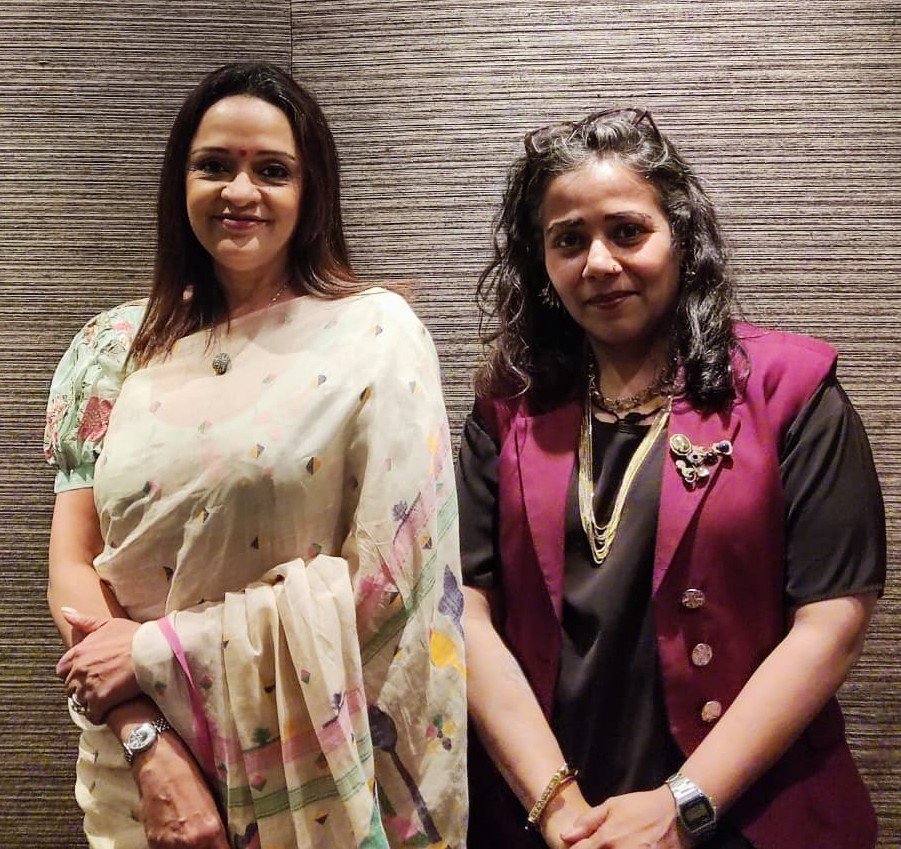
Mentioning Pearl Academy’s vision for Bengal’s emerging creative talent, Aditi Srivastava, President, Pearl Academy, said, “Kolkata has always shaped India’s cultural and creative identity through fashion, textiles, cinema, art, and design. But the next generation of creative careers will require far more than technical expertise alone. Students today need exposure to technology, business, global markets, and entrepreneurial thinking. At Pearl Academy, our focus is on building creators, innovators, and leaders who can navigate and shape the future of the global creative economy.”
At the centre of this transformation is Pearl Academy’s partnership with OpenAI and a newly restructured academic framework where more than 33% of the curriculum is meaningfully AI-integrated. Students work with generative AI tools, AI-assisted workflows, and emerging intelligent systems across disciplines, reflecting the growing shift toward technology-enabled creative professions.
The transformation is guided by Pearl Academy’s Human Intelligence + Artificial Intelligence philosophy, which views AI as a collaborative tool that enhances creativity, innovation, and problem-solving.
Speaking about Pearl Academy’s “Complete Professional” philosophy, Shalini Gupta, Dean, School of Complete Professionals, Pearl Academy, said, “Creative industries today are seeking professionals who can combine imagination with adaptability, communication, collaboration, and strategic thinking. Our learning ecosystem is designed to develop students who are domain-ready, AI-ready, and industry-ready through integrated exposure to design, leadership, entrepreneurship, and real-world learning experiences.”
Through its Runway Incubator and founder-first philosophy, Pearl Academy also supports students interested in launching independent labels, creator-led ventures, and innovation-driven businesses.
Pearl Academy’s academic portfolio spans Fashion Design, Textile Design, Communication Design, Interior Design, Product Design, Fashion Styling, and Fashion Communication. Through the Pearl Academy School of Business, the institution also offers programmes in Global Luxury Brand Management, Fashion & Lifestyle Business Management, Advertising & Brand Management, and Media & Entertainment Management. In addition, it has recently launched AI-focused BBA and MBA programmes in knowledge partnership with EY India, designed to prepare students for careers shaped by AI, digital transformation, strategy, and innovation. The programmes combine industry-led learning, AI-enabled business applications, case-based pedagogy, live consulting exposure, and entrepreneurial thinking, reflecting the growing convergence of business, technology, and the creative economy.
Industry immersion remains central to Pearl Academy’s academic model. The institution is the education partner of FDCI x Lakmé Fashion Week and the only educational institution represented at India Couture Week, giving students direct exposure to India’s fashion and luxury ecosystem through showcases, internships, and industry engagement.
Its industry-led learning ecosystem is further strengthened through partnerships with Tech Mahindra, Reliance Brands, and MAC Cosmetics, alongside live projects with brands including Google Chromebook, Superdry, Andaz Delhi, and realme. Notably, a Product Design student’s concept was integrated into the design language of the realme P4 Power smartphone, giving students hands-on exposure to real-world innovation, consumer technology, and brand-led problem-solving.
The placement ecosystem is supported by over 700 national and international recruiters annually, with students securing opportunities with brands including Ferrari, Tod’s, Dior, Condé Nast, Christian Louboutin, Capgemini, Maruti Suzuki, Burberry, Reliance Brands, Aditya Birla Group, and Galeries Lafayette.
Students also gain access to global immersion opportunities across London, Paris, Milan, and New York, alongside exchange partnerships with Nottingham Trent University, Manchester Metropolitan University, and the Royal Academy of Art, The Hague.
For Bengal’s young creators, designers, entrepreneurs, and future luxury leaders, the question is no longer whether opportunity exists, but whether they are prepared to lead it. Pearl Academy’s AI-first ecosystem aims to ensure Bengal’s creative talent is equipped not only for the jobs of tomorrow, but for the industries they will help redefine.