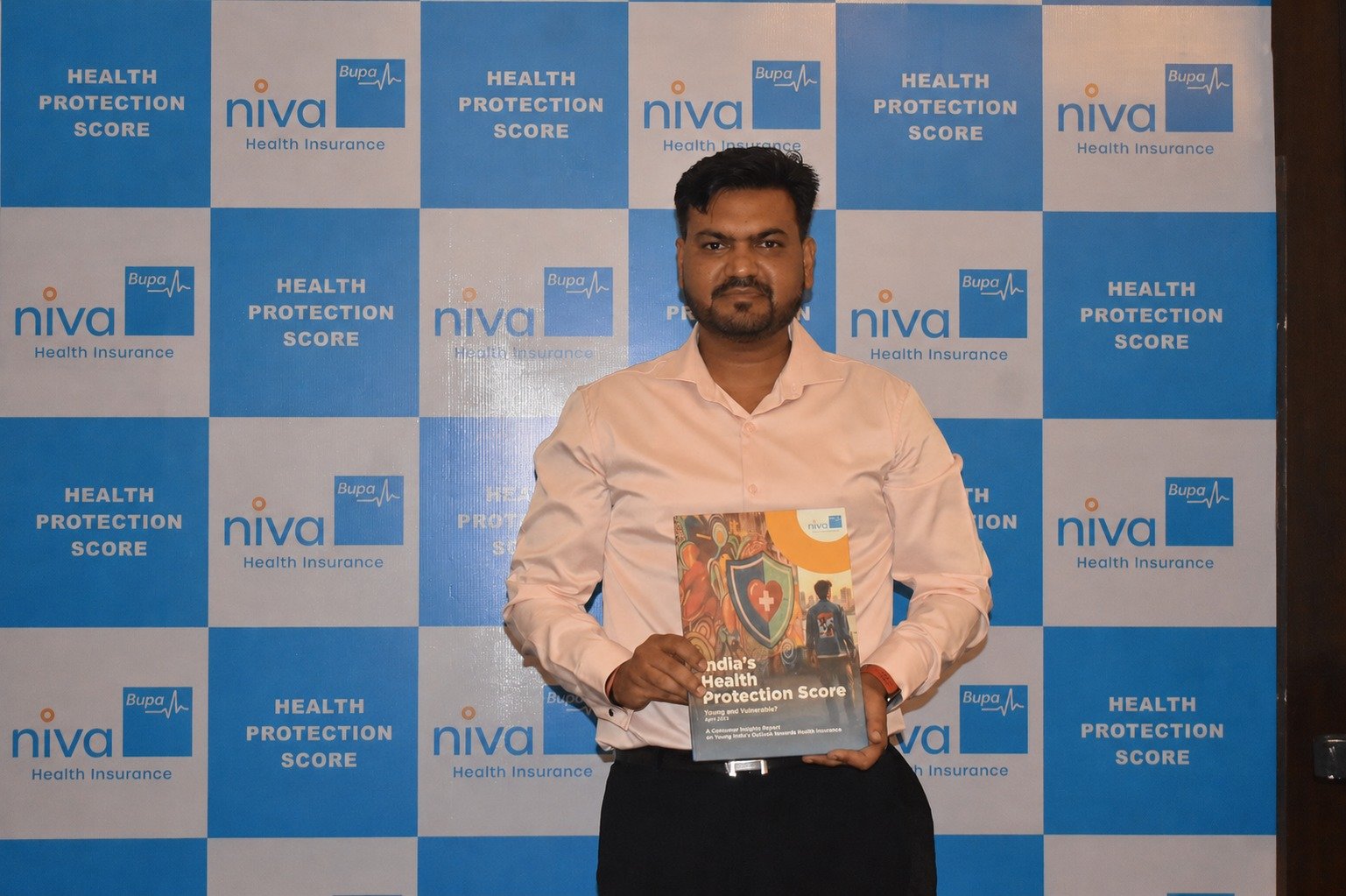
Kolkata, 25th May 2026 : Niva Bupa Health Insurance has unveiled a consumer insights report on Young India’s outlook towards Health Insurance which reveals that youngsters in Kolkata are amongst the most financially and medically prepared in the country.
The report is based on a comprehensive survey of 2,400+ respondents across 35+ urban and rural centres spanning Tier 1, Tier 2, Tier 3 towns and villages. It introduces Health Protection Score (HPS)—a first-of-its-kind composite metric designed to measure how prepared Indians are to manage medical emergencies. The score evaluates individual’s basis four key dimensions: 1) Lifestyle discipline, 2) Family health history, 3) Self-assessment of health status and preventive care 4) Financial adequacy. Based on this composite score (0–10), individuals are categorized into three segments: Very Vulnerable (0 – 2.99) Somewhat Vulnerable (3–5.99) Safe & Secure (6 and above).
Young India: High intent, low preparedness
The findings reveal a significant gap between awareness and action:
• 51% of young Indians consider health insurance among their top three financial priorities, yet only 14% own a policy
• Nearly 3 in 4 (76%) young Indians remain financially or medically exposed to unforeseen health events.
• Only 24% are adequately prepared to handle a medical emergency
Kolkata emerges as a standout market
Against this national backdrop, Kolkata demonstrates significantly stronger readiness:
• HPS of 5.87 vs. India average of 4.54, indicating higher overall preparedness
• 21% ownership of personal health insurance, well above the national average of 14%
• Only 2% policy lapse rate, compared to 6% nationally
• 54% classified as “safe and secure”, more than double the national average of 24%
• Just 3% fall under the “very vulnerable” category, among the lowest in the country
These findings underline Kolkata’s strong financial discipline and consistent commitment to maintaining health protection.
Strong financial readiness despite lower cost perception
Interestingly, Kolkata respondents estimate emergency healthcare expenses at approximately ₹96,000—significantly lower than the national average. However, their financial preparedness far exceeds this perception, with the ability to arrange an average of ₹4.9 lakh at short notice.
This indicates a robust financial safety net, going beyond perceived healthcare costs. According to Niva Bupa’s internal estimates, individuals in the age group of 24-34 years should ideally have at least ₹3 lakh readily available for health emergencies in the absence of insurance.
Confidence-driven behaviour shapes insurance adoption
While Kolkata scores high on preparedness and ownership, intent to purchase health insurance is relatively lower at 43% compared to the national average of 51%. This is likely driven by higher existing coverage and a stronger sense of financial confidence.
The study also reinforces key behavioural insights:
• Perceived good health remains the biggest barrier to purchase
• Human touchpoints—agents, banks, and family—continue to play a decisive role in final purchase decisions
• Insurance ownership reflects financial discipline, not just earning capacity
Commenting on the findings, Nimish Agrawal, Director – Digital Business Unit & Chief Marketing Officer, Niva Bupa Health Insurance said, “Kolkata stands out as a market where awareness, financial preparedness, and health insurance adoption come together strongly. The higher ownership levels and lower lapse rates indicate that consumers here not only understand the importance of health insurance but also stay committed to maintaining that protection. What is particularly encouraging is the strong financial preparedness among young consumers, which gives them greater confidence to handle medical uncertainties. At the same time, there is an opportunity to further strengthen preventive health behaviours, especially around lifestyle choices.
At Niva Bupa, we remain focused on supporting such markets with solutions that go beyond protection—enabling healthier living and long-term well-being while helping bridge the gap between confidence and comprehensive preparedness.”
Opportunity in health behaviours
Kolkata stands out as a leading example in health preparedness, demonstrating strong performance across key drivers such as financial adequacy, awareness of ailments, and regular health assessments. Its higher insurance ownership and lower vulnerability levels position the city as a model for others to emulate in building a robust health protection ecosystem. While the report does highlight a slight gap in lifestyle-related behaviours, this presents a clear opportunity to further enhance preventive health practices—reinforcing Kolkata’s potential to set the benchmark for holistic health preparedness in India.