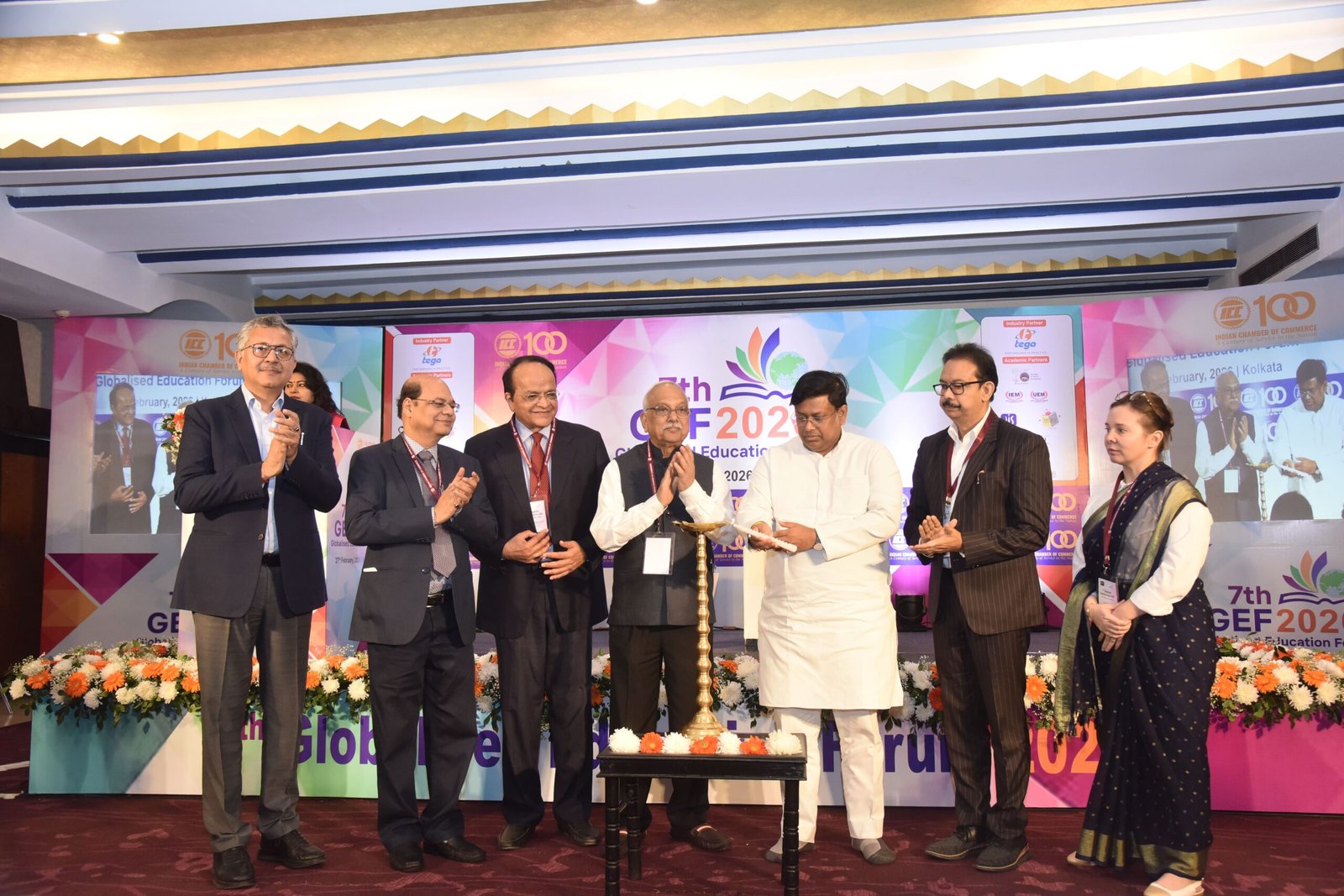
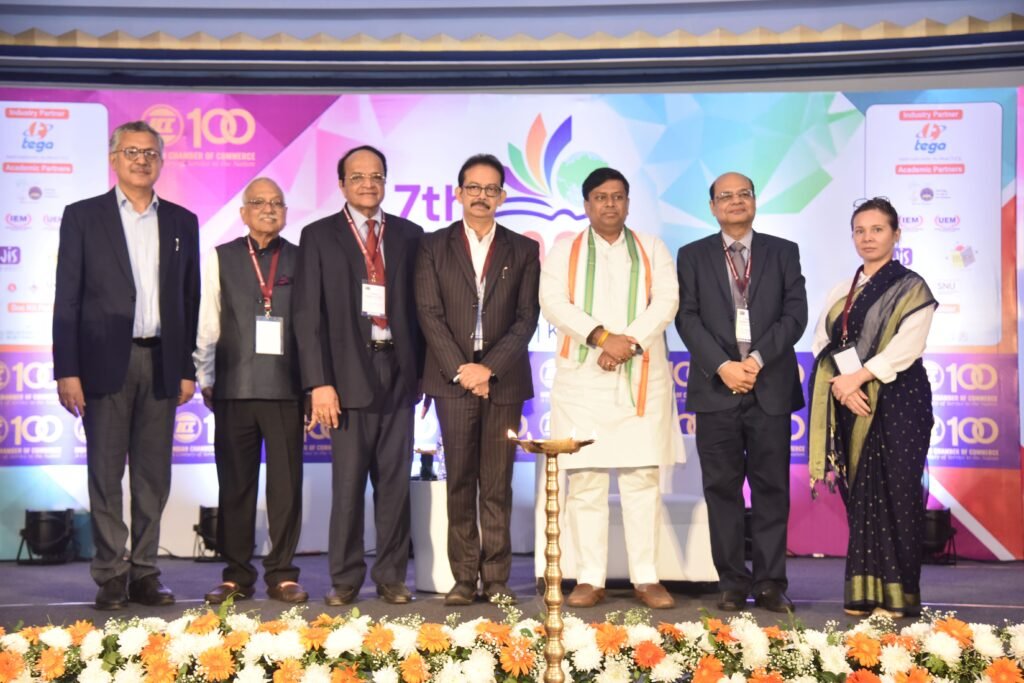
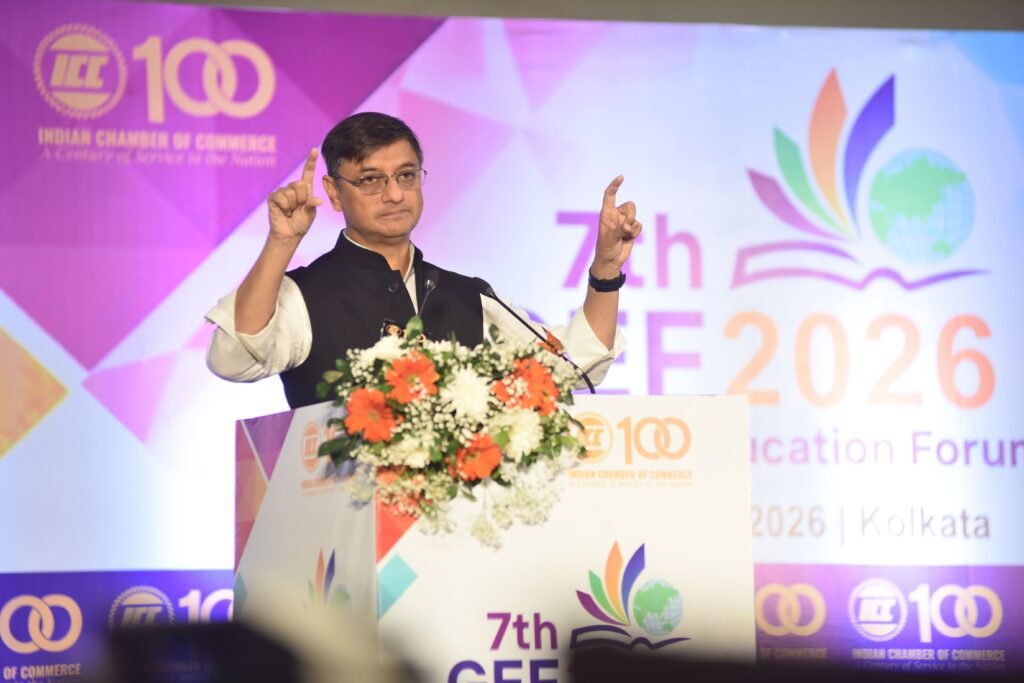
Kolkata, February 27, 2026: The Indian Chamber of Commerce (ICC) on Friday hosted the 7th Global Education Forum (GEF) in Kolkata, convening policymakers, academicians, industry leaders and international representatives to chart a roadmap for Viksit Bharat @2047 through future-ready higher education institutions.
Addressing the gathering, Union Minister of State for Education and senior BJP leader Sukanta Majumdar underscored that any serious transformation of higher education must begin with the National Education Policy 2020, which he described as “the most comprehensive reimagination of our education system in over three decades.”
He said the proposed Viksit Bharat Shiksha Adhishtan Bill, 2025 would create “a new architecture for governance,” shifting the regulatory approach “from inspection to trust.” Stressing the urgency of curriculum reform, Majumdar remarked, “We cannot prepare our students for tomorrow with outdated curricula and rigid pedagogies.”
Calling Viksit Bharat @2047 “not just a slogan, but a national commitment,” the minister urged institutions, industry and policymakers to act as “co-creators of the talent ecosystem.” “India’s demographic dividend is real, but time-bound,” he said. “Let us seize it together with urgency, ambition and unwavering resolve.”
Sanjeev Sanyal, Member of the Economic Advisory Council to the Prime Minister, highlighted the disruptive impact of artificial intelligence on universities, arguing that the traditional lecture-based tertiary education model is becoming increasingly obsolete. He described AI as a “massive opportunity” for India, noting that knowledge is now scalable and widely accessible.
Sanyal urged institutions to leverage technology to expand multilingual and affordable education, while placing greater emphasis on research capabilities and proficiency testing to ensure quality and global competitiveness.
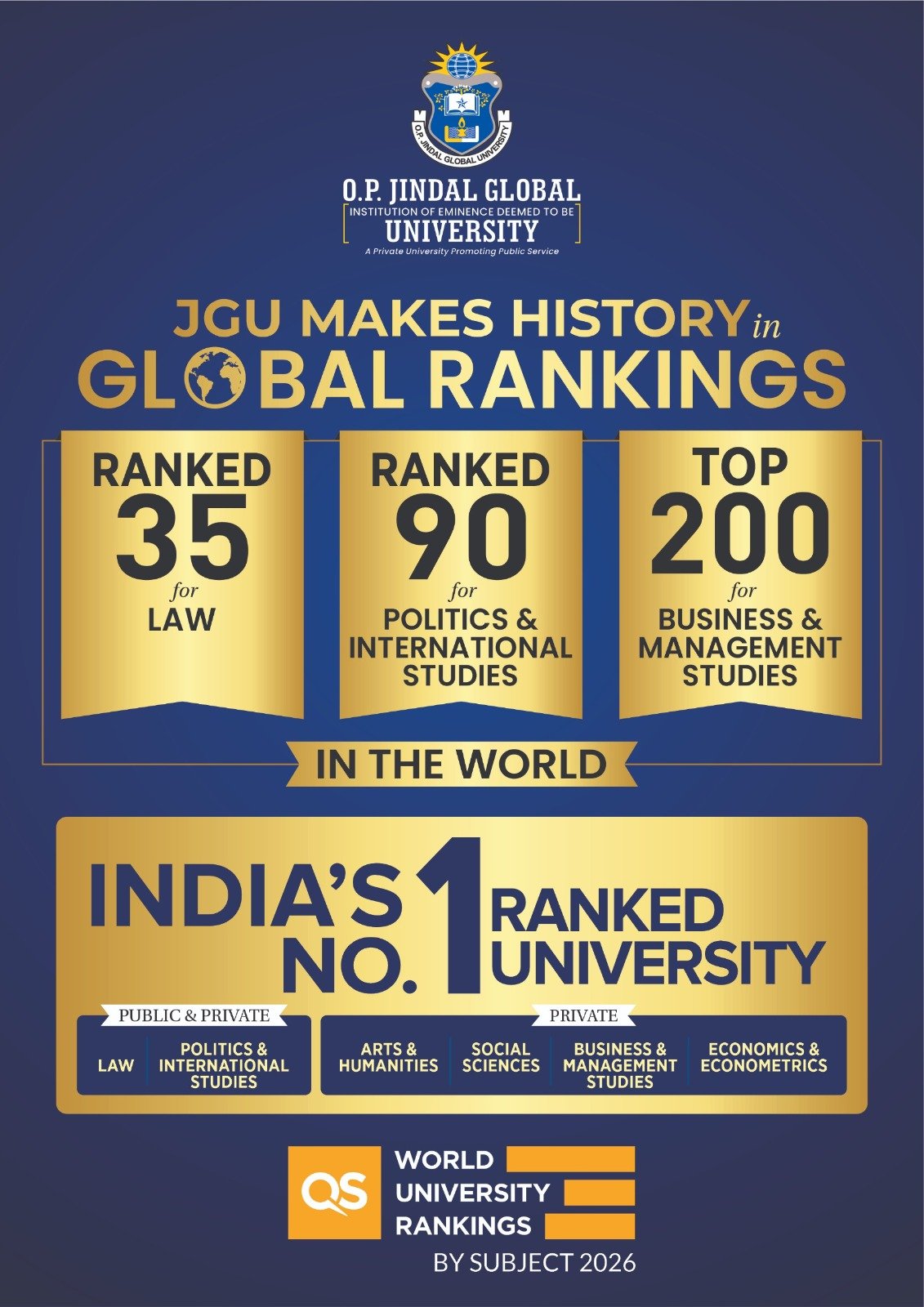
Satyam Roychowdhury, Chairman of the ICC National Expert Committee on Higher Education & Training, described the present moment as pivotal for India’s academic landscape. He asserted that higher education must go beyond degrees to nurture critical thinkers, problem-solvers and innovators. Roychowdhury also pointed to India’s record presence in the QS World University Rankings 2026, stressing that inclusive growth and employability must remain central to reform efforts.
Industrialist Madan Mohan Mohanka, Chairman of Tega Industries, said India’s journey towards Vision 2047 must be powered by entrepreneurs rather than job seekers.
“If India is to become a Viksit and Atmanirbhar Bharat and the world’s number one economy by the time we complete 100 years of Independence, we must create job creators, not job seekers,” he asserted. Mohanka projected that without multidimensional human development and strong support for first-generation entrepreneurs, the demographic dividend could turn into a “demographic disaster.”
Pradip Agarwal, Member of ICC’s National Executive Committee and CEO of Heritage Group of Institutions, remarked, “The future is not something we enter, the future is something we create.” He cautioned that “scale without quality is a missed opportunity,” adding, “The question is not whether reform is needed, but whether implementation will match ambition.”
Special addresses were delivered by Julia Martin, French Language and Education Attaché at the Embassy of France in India, and V. N. Rajasekharan Pillai, former Chairman of the University Grants Commission.
In his closing remarks, Rajeev Singh, Director General of ICC, said the higher education system had been “rightly challenged with revolutionary thoughts” during the deliberations, emphasising that systemic transformation “cannot be driven by the government alone,” and calling for sustained collaboration among academia, industry and policymakers.